

How to Exercise the Mind (Gently) Back into Creativity After Childbirth
So, like many women, I spent my 20s in a committed relationship—with ambition. I was a performance artist with a dream (yes, italic-worthy). Based in Pakistan, I squeezed every drop out of time: working, curating, networking, traveling, stacking skills like a creative overachiever, and building something that resembled both visibility and financial stability.
I also had another dream: to become a mother. To build a family. To nurture tiny humans while sustaining a meaningful partnership.
Naturally, I assumed I could do both seamlessly—like a well-edited montage.
Reader, I could not.
I learned this the hard way when I decided to curate an exhibition three months postpartum, with a colicky baby who had strong opinions about sleep (namely: no). Despite gentle warnings from colleagues, I was determined to prove that motherhood and career could co-exist immediately, elegantly, and without consequence.
They could not. Not like that.
So, I stopped.
I stepped away from work and leaned fully into motherhood: co-sleeping, breastfeeding, nurturing, and showing up as a present parent. It was immersive, exhausting, beautiful, and—strangely—quiet in a way I hadn’t experienced before. The external noise of deadlines and ambition faded, replaced by the internal rhythm of caregiving.
Time passed. Slowly, then suddenly.
And one day, I felt it—that itch. The desire to return. Not in a grand, cinematic way, but tentatively. A quiet question: Can I make things again?
The answer wasn’t immediate. In fact, it was frustratingly unclear. I found that I had lost something I once relied on: discipline, focus, the mental elasticity required for creativity. My brain, once a hyperactive idea factory, now felt like it was buffering.
So I began—very gently—to exercise my mind back into motion.
Here’s what helped:
- Get out of the pajamas (no, really).
I discovered that simply getting ready—at all—shifted something internally. No elaborate five-step morning ritual. No 5 a.m. enlightenment routine (absolutely not, I like sleep and I’ve earned it). Just changing out of pajamas, brushing my hair, maybe adding a touch of lip gloss. The result? A small but noticeable surge of energy. A signal to my brain: we are participating in the world today. - Choose a hobby that tolerates chaos.
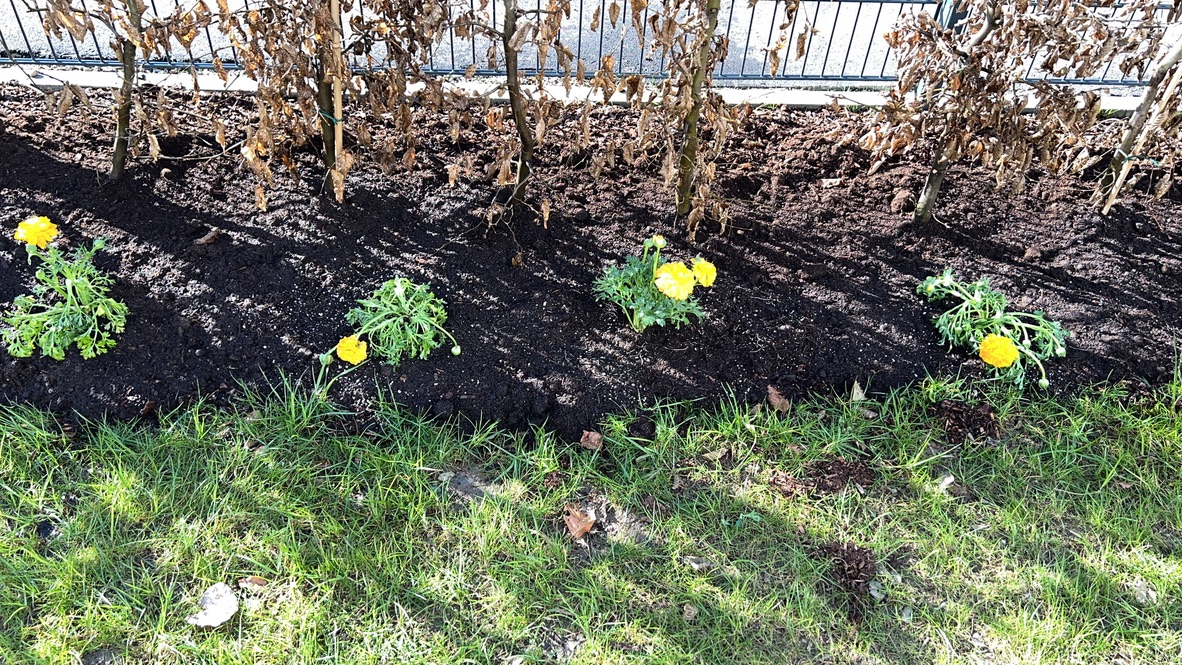
I needed something flexible, forgiving, and preferably toddler-compatible. Enter: gardening. Low barrier, relatively inexpensive, and surprisingly therapeutic.
I started small—some seeds, soil, pots. Every other day, I’d step outside and tend to my plants while my child conducted highly questionable experiments nearby. It wasn’t peaceful, but it was grounding. I used my hands. I built something slowly, imperfectly, and without pressure.
And then something remarkable happened: my mind began to wake up.
Not dramatically. Not all at once. But gradually, like a dimmer switch turning up. I started having thoughts again—creative ones. Ideas about the garden, about making things, about possibility. The act of nurturing something external seemed to reawaken something internal.
I wasn’t “back” yet—but I was no longer disconnected.
And that, I realized, is the real beginning.
- Systems, Systems, Systems (Did I Mention Systems?)
Somewhere between reheating coffee for the third time and negotiating with a toddler over the ethics of eating crayons, I had a realization: I may have stepped away from my career, but my skill set did not resign.
If anything, it pivoted.
Cooking, for instance, was no longer a casual, “let’s see what I feel like” activity. It became a daily operational requirement—for survival, for nourishment, for maintaining some illusion of order. And yes, what I made for myself conveniently scaled up for the rest of the household (my husband insists he had input; I generously allow this narrative).
But here’s where it got interesting: I started applying the same systems-thinking I once used in my professional life to run my home.
Because why not?
If I could manage projects, exhibitions, and deadlines, I could certainly manage laundry, groceries, and the mysterious exponential growth of tiny socks.
So I built systems.
Weekly menus to eliminate the daily “what are we eating?” existential crisis. Automated grocery deliveries because wandering aisles with a toddler is a high-risk sport. Ruthless decluttering—if it didn’t serve a purpose, spark joy, or at least behave predictably, it was gently escorted out.
I created zones for everything: books, toys, pantry items, daily essentials. A place for each thing, and—more importantly—a fighting chance that it might return there.
Somewhere along the way, I became deeply, unapologetically nerdy about it. Organizational strategies became my new creative outlet. Structure, I realized, wasn’t the enemy of creativity—it was the scaffolding that made it possible.
By reducing decision fatigue and daily chaos, I was quietly making space in my mind again.
Space to think.
Space to imagine.
Space to create.
Turns out, running a household like a (slightly sleep-deprived) CEO isn’t just about efficiency—it’s about reclaiming mental clarity, one system at a time.
At this point, I’ve become a full-fledged nerd about systems—color-coding, labeling, optimizing like it’s a competitive sport. Honestly, this probably deserves its own blog post. But you get the point.)
The takeaway is simple: structure didn’t limit me—it freed me. By organizing the external chaos, I was quietly untangling the internal kind. And in that newly created mental space, creativity found its way back—not as a dramatic return, but as a steady, reassuring presence.
- Do Nothing (Yes, This Is the Strategy)
Here’s the paradox no one really prepares you for: even when you get a break as a mother, your mind refuses to clock out.
You finally sit down—maybe the baby’s asleep, maybe your partner has heroically taken over—and instead of resting, your brain launches into a relentless highlight reel of unfinished tasks. The dishes. The laundry. The messages you forgot to reply to. The thousand tiny responsibilities orbiting your child, your partner, your family.
The body pauses. The mind… absolutely does not.
And that’s precisely the problem.
At some point, I realized I wasn’t lacking creativity—I was lacking space. My mind was so densely packed with logistical noise that there was no room for a single original thought to land, let alone grow.
So I tried something radical: I did nothing.
Not scrolling. Not “productive resting.” Not mentally reorganizing my life while pretending to relax. I mean actual, intentional stillness.
You. Just. Need. To. Take. A. pause. And. Breathe.
No, no I mean it. Just stop and breathe. (Yes, it sounds obvious. No, it is not easy.)
I started treating my mind like a blank canvas. Not something I needed to immediately fill, fix, or improve—but something I needed to clear. The goal wasn’t to force ideas to appear. The goal was to make room for them, should they choose to.
What did that look like in practice?
Listening to music—without multitasking.
Sipping my favorite drink slowly, like I had nowhere else to be.
Staring out the window and letting the world happen without needing to engage with it.
Small, quiet acts of non-doing.
And something shifted.
In those moments of mental stillness, I noticed the faint return of something I hadn’t felt in a while: a thought I could actually hold onto. A flicker of curiosity. The beginning of an idea.
Creativity, it turns out, doesn’t thrive in overcrowded spaces.
Sometimes, the most productive thing you can do… is absolutely nothing.
- Interrupt the Spiral (Gently, but Firmly)
If there’s one thing that quietly intensifies after childbirth, it’s not just responsibility—it’s the mind’s ability to spiral.
Your body has been through a seismic event. Hormones are recalibrating, sleep is fragmented, appetite shifts, pain lingers in unexpected ways, and beneath all of it runs a low, persistent current of worry. It’s not surprising that your system occasionally tips into overdrive.
Enter: cortisol. The stress hormone. Helpful in short bursts, but less charming when it overstays its welcome.
What I didn’t anticipate was how quickly anxiety could become self-referential—you feel anxious, then you worry about feeling anxious, and suddenly you’re caught in a loop that feeds itself.
It’s exhausting. And it’s real.
So the work becomes this: learning to notice the moment the spiral begins—and interrupting it.
Not by fighting it aggressively, but by questioning it.
Is this thought true?
Is this fear grounded in reality, or is it a reflex?
More often than not, I found that these intrusive thoughts weren’t facts—they were echoes of overwhelm.
And slowly, I began to replace them with something steadier:
A reminder that I am exactly where I need to be.
That choosing to pause my career wasn’t a failure—it was an investment.
That this season of caregiving, however consuming, is also building something invisible but essential.
Because it is.
Even if you can’t map out how it all connects yet, trust that it does.
In the meantime, the goal isn’t to eliminate overthinking entirely (an unrealistic and frankly suspicious objective). The goal is to soften its grip. To calm the nervous system enough that your mental energy isn’t constantly being drained by loops that lead nowhere.
And then—gently, patiently—redirect that energy.
Toward something small. Something manageable. Something that feels even slightly constructive.
Is it easy? Not at all.
But it is possible.
I wouldn’t say that lightly.
Creativity after childbirth doesn’t return on command. It doesn’t respond well to pressure or comparison. But it does respond—to patience, to small rituals, to the quiet rebuilding of self.
You don’t have to rush it.
You just have to start somewhere.
Thank you dear reader for staying with me till the end.
If something in this resonated—even a small shift, a quiet reassurance, or a moment of recognition—then I’m glad I wrote it.
I’d genuinely love to hear your thoughts, your experiences, or even your own ways of finding your way back to yourself. Leave a comment and let’s keep the conversation going.
Until the next one. 🌿

Written by - Natasha Jozi
Hi, I’m Natasha—an artist from Pakistan who once imagined a life full of creativity, curiosity, and beautifully unpredictable experiences. Technically, I got exactly what I asked for… just not in the way I expected. Three years ago, I became a mom and moved to Germany—entering a new era of life best described as: an infinite loop of laundry, dishes, cleaning, and existential reflection (usually all at once). At some point, I started wondering if this was a glitch in the system—or just… the system. But somewhere between folding tiny socks and reheating my coffee for the third time, I realized two things: one, I’m not the first person to be humbled by daily life, and two, chaos becomes far more manageable when you learn to design around it. This blog is my attempt to do exactly that—make sense of the mess, romanticize the mundane, and build a life (and self) that actually works.
Natasha Dani
hi i love this